Organization Without Perfection
How I Used AI to Simplify Our Toy Kitchen — Without Buying Anything
We already had shelves.
We already had baskets.
We already had little containers.
And still, our toy kitchen and pretend shop kept turning into a mess.
So this wasn’t really a storage problem.
It was a system problem.
I wanted to know if AI could help me simplify the setup using only what we already had — no makeover, no new bins, no Pinterest-perfect reset.
And honestly?
I was skeptical.
But this one actually worked.
The Problem Wasn’t Storage
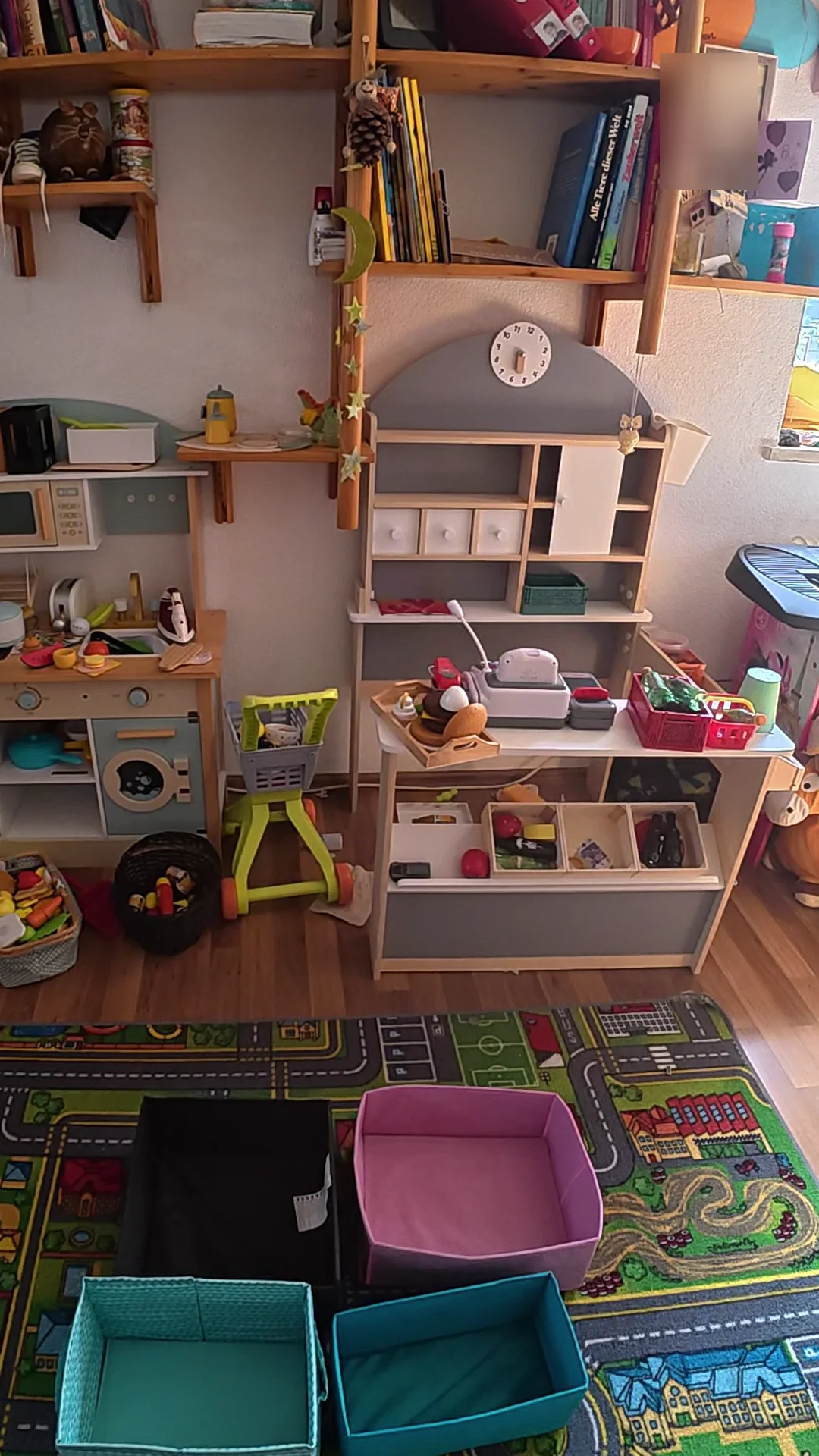
At first glance, our toy kitchen looked like it should have been easy to keep organized.
There were shelves. There were baskets. There were containers.
Actually, there were a lot of containers.
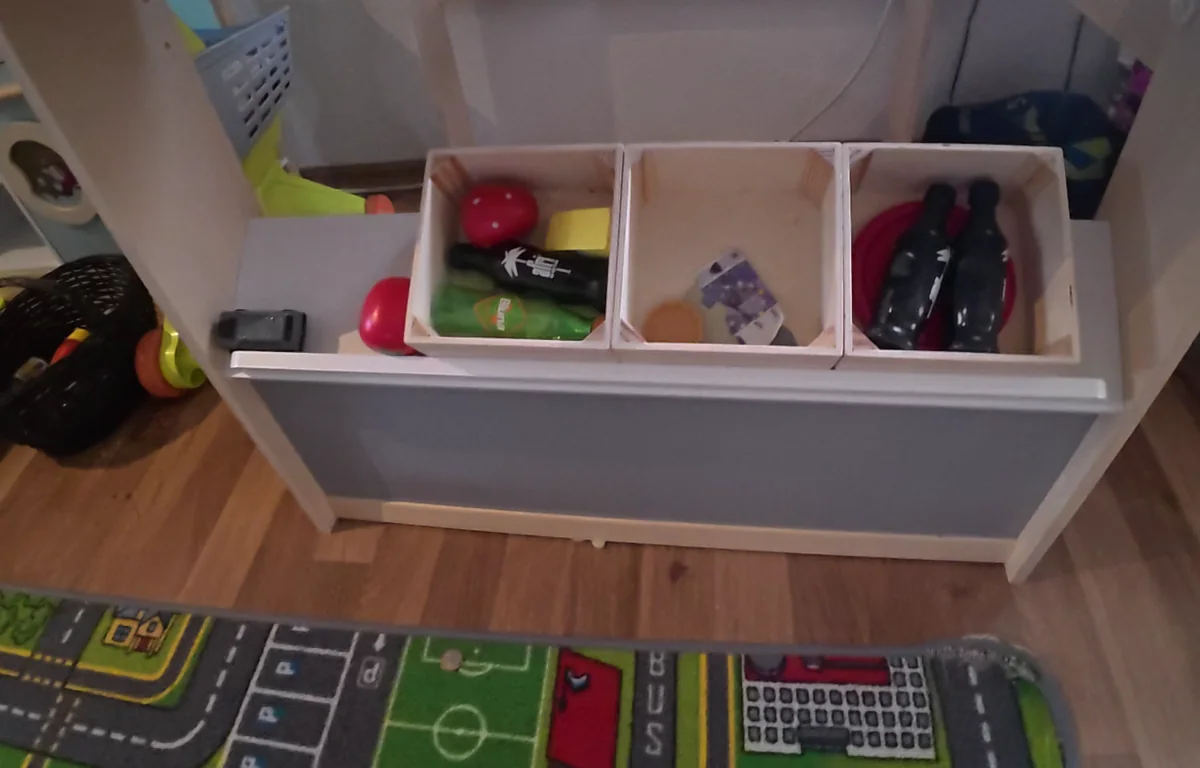
When the pretend shop came into our home, it came with all those little compartments. So naturally, we started giving everything its own tiny category.
Red vegetables had one place.
Green vegetables had another.
Yellow vegetables had another.
Then there was meat, cheese and all the other little food groups.
It looked very organized.
In theory.
In real life, it meant that every reset came with a ridiculous number of tiny decisions.
Where exactly does this tomato go?
Which container was cheese again?
Is this a kitchen thing or a shop thing?
And what on earth do I do with the random toy that somehow ended up in here?
The problem wasn’t that we needed more storage.
We needed fewer decisions.
So I Asked AI to Simplify It
I didn’t want AI to design a prettier playroom.
I didn’t want a shopping list for matching storage bins.
And I definitely didn’t want another organization system that would look amazing for two days and then annoy me forever.
The goal was much simpler:
- use what we already had
- make everything visible and easy to reach
- reduce the number of categories
- make resetting the space easier
- keep it realistic for actual family life
AI looked at the existing setup and suggested something almost suspiciously simple.
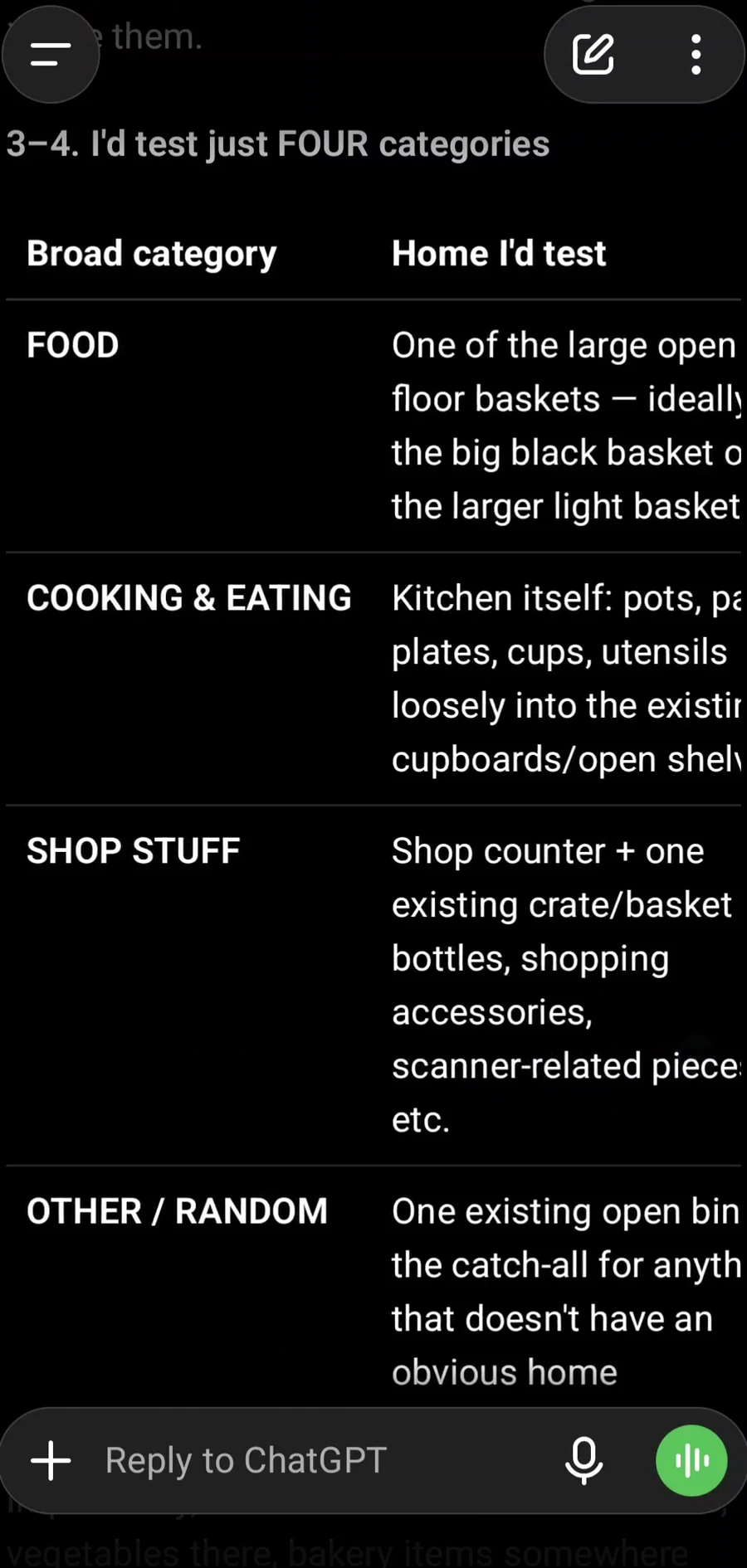
Four broad homes.
The Four-Category System
Instead of dozens of tiny homes, the new setup uses just four broad categories:
1. Food
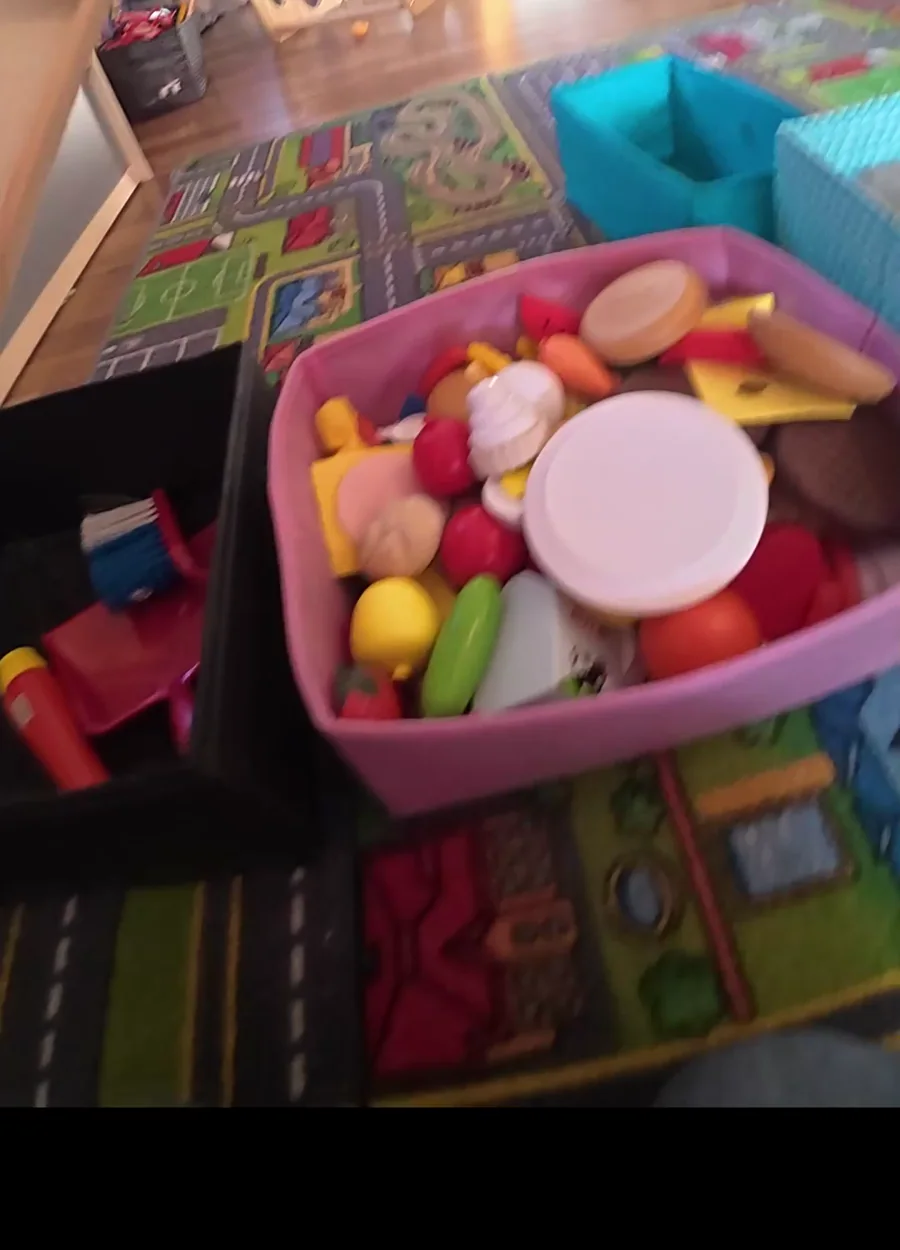
All the pretend food goes together.
That’s it.
No more separating red vegetables from green vegetables from yellow vegetables.
No separate micro-category for cheese.
No trying to remember where one particular plastic tomato belongs.
Food is food.
2. Cooking & Eating
Pots, pans, cups, plates, cutlery and other kitchen things stay with the toy kitchen.
The rule is equally complicated:
Kitchen things go in the kitchen.
Which is exactly the level of complexity I can handle during cleanup.
3. Shop Stuff
Anything that obviously belongs to the pretend shop stays with the shop.
Again, broad category.
No need to create a perfect little retail inventory system for preschoolers.
4. Other / Random
And then there’s the category that might actually make the whole system work:
the catch-all.
If something doesn’t have an obvious home, it goes there.
No standing around trying to invent the perfect category.
No adding yet another little container.
No decision spiral.
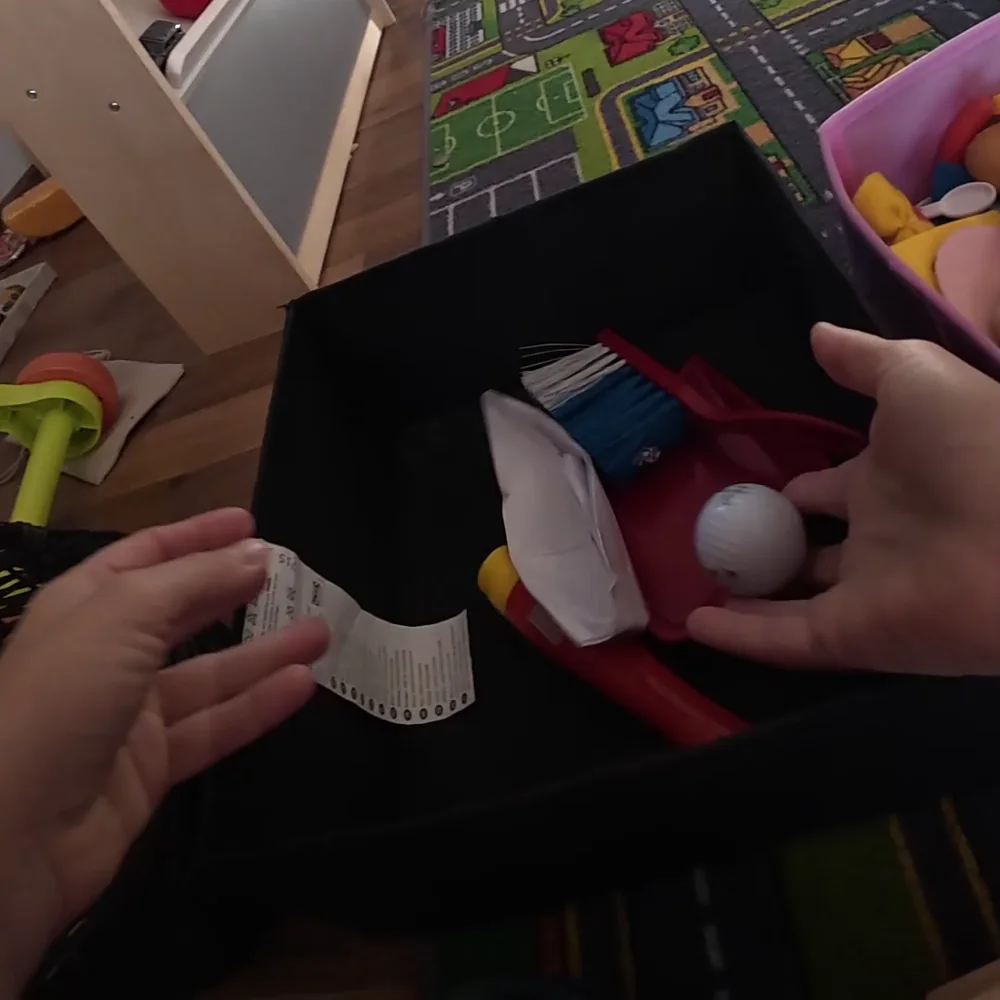
That one small rule removes a surprising amount of friction.
What I Changed — and What I Didn’t
I didn’t buy anything.
The baskets were already there.
The containers were already there.
The shelves were already there.
I simply stopped asking them to do such complicated jobs.
Some containers that previously held one very specific type of toy now hold an entire broad category instead.
That means the finished space doesn’t necessarily look dramatically different.
And I actually like that.
Because this wasn’t supposed to be a makeover.
It was supposed to make everyday life easier.
Did It Actually Work?
Surprisingly:
yes.
I was skeptical while setting it up.
The categories almost felt too broad compared with the system we had before.
But once I started putting everything back, the difference became obvious.
There was much less thinking involved.
Toy food?
Food basket.
Plate?
Kitchen.
Shop accessory?
Shop.
Something weird?
Random box.
Done.
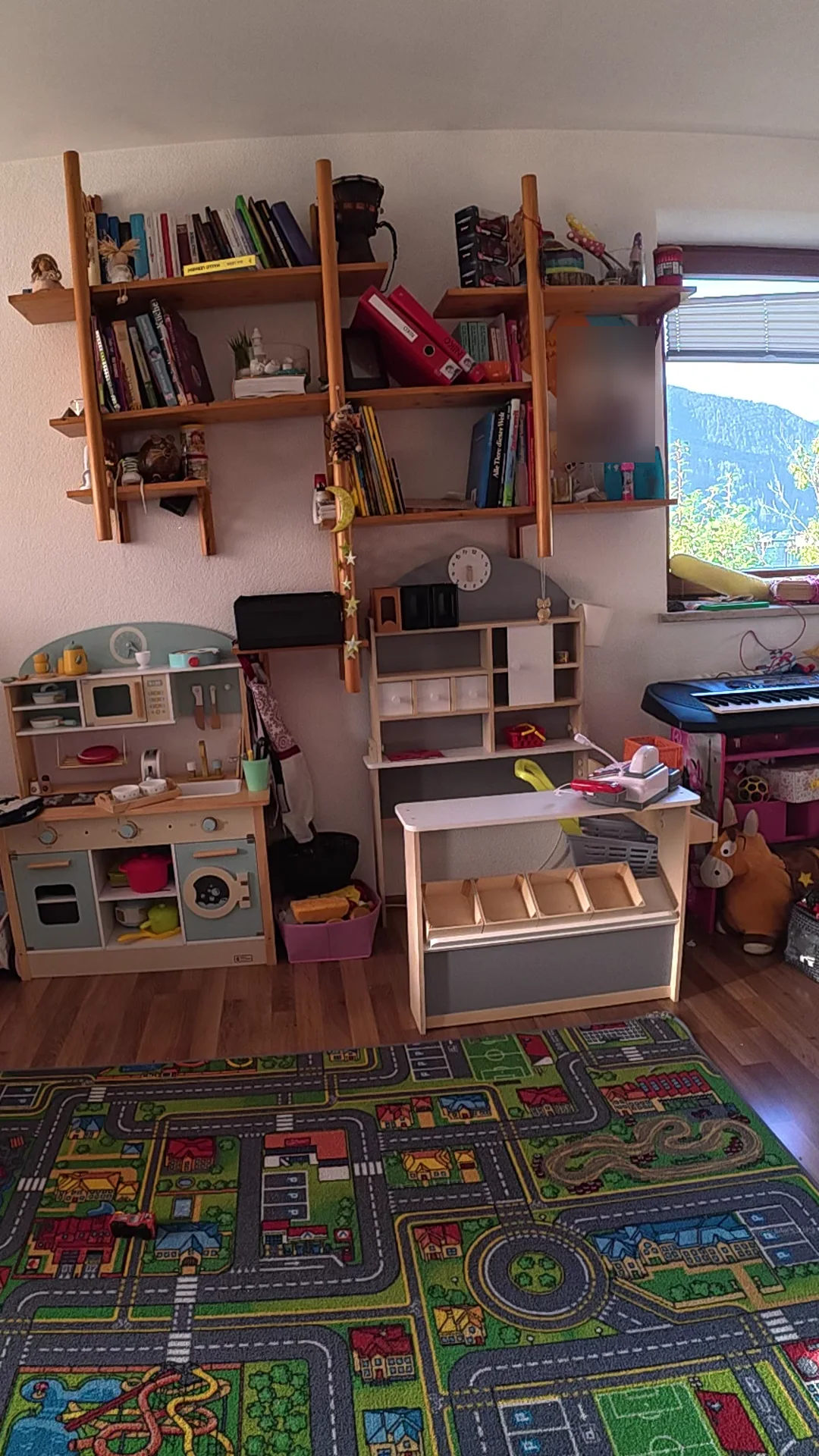
The space isn’t magically perfect.
But putting it back together is much more obvious.
And that’s far more useful to me than perfect sorting.
And Then Something Unexpected Happened
There’s another part of this experiment that I only noticed after we had lived with the new system for a while.
The kids started playing with the toy kitchen and shop more again.
That wasn’t actually something I asked AI to solve.
But simplifying the setup seems to have made the whole area easier to use too.
Things are visible.
There’s less fussy sorting.
And the toys feel more accessible again.
Now, does that mean my kids happily put everything back into its new home when they’re finished?
Absolutely not. 😅
Cleanup still lands on me most of the time.
But there’s one very important difference:
now it goes really fast.
I’m no longer standing there wondering whether a plastic pepper belongs with the red vegetables, the green vegetables or whichever tiny category seemed logical when we originally organized the shop.
Food goes with food.
Kitchen things go in the kitchen.
Done.
And for me, that’s a genuine improvement.
The Bigger Lesson: Fewer Categories, Fewer Decisions
This experiment wasn’t really about a toy kitchen.
It was about something I keep noticing with organization systems in general:
Sometimes we make them too clever.
Detailed categories can look beautifully organized.
But every extra category creates another decision.
And when you’re the person who eventually resets the space — often while doing five other things at the same time — those decisions add up.
The best system isn’t necessarily the one with the most precise sorting.
Sometimes it’s simply the one that makes the next action obvious.
For this space, four broad categories work better than dozens of tiny ones ever did.
Want to Try the Same AI Experiment?
You don’t need to copy our exact categories.
The useful part is asking AI to simplify your existing setup, rather than asking it to design a completely new one.
Here’s a copy-and-paste version:
Copy This Prompt
I want to simplify a toy or kids’ play area without buying anything new.
The space already has storage, shelves, baskets and containers. The real problem is that cleanup takes too many small decisions.
Please suggest a simpler system using only what I already have.
Goals:
- fewer categories
- visible storage
- easy access
- easy reset
- realistic for everyday family lifePlease:
1. identify what is making the current system harder to maintain
2. suggest only 3–5 broad categories
3. tell me what should go in each category
4. suggest one catch-all category for things without an obvious home
5. avoid fine sorting unless it is genuinely useful
6. keep the system practical, not Pinterest-perfect
7. do not suggest buying new organizers unless absolutely necessary
One important thing: tell AI what storage you already have.
The point isn’t to get a generic organization plan.
The point is to make your actual home easier to manage.