Sustainable-ish Family Life
I Tried DIY Dishwasher Powder — Here’s Why I Stopped
I asked AI for a more sustainable DIY dishwasher powder. Four real test cycles later, I had a different kind of answer.
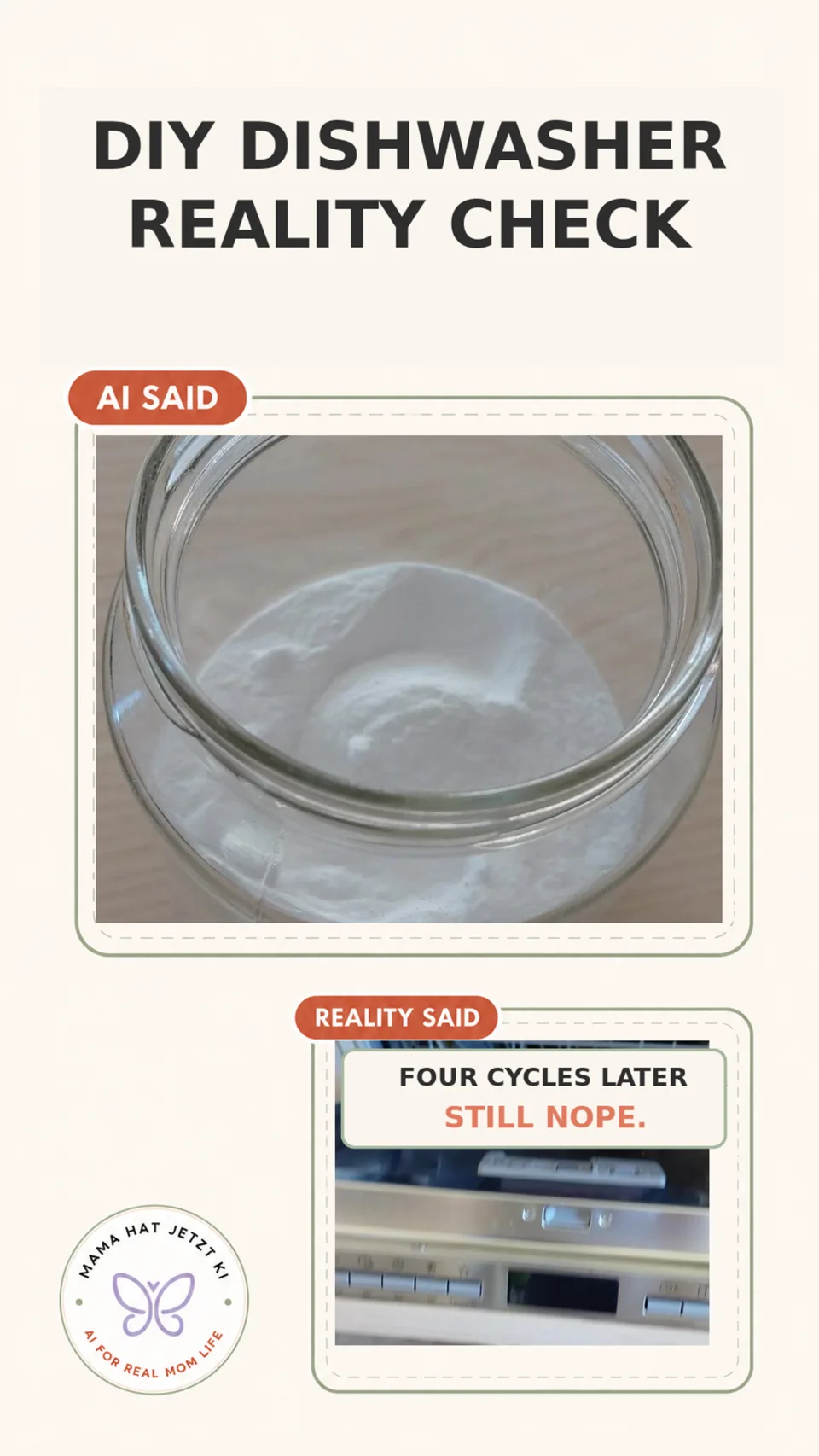
The short version
A sensible idea that did not survive real life
DIY dishwasher powder sounded like the kind of small, practical swap that might fit our family. So I asked AI to help me find a more sustainable DIY option.
Then I tested it. And tested it again. The experiment was real, the results were underwhelming, and eventually the most useful thing AI helped me do was stop troubleshooting a solution that was not solving the problem.
The real-life problem
Dirty dishes are not a theoretical inconvenience
A dishwasher product has one basic job: it needs to get the dishes reliably clean. If it does not, someone has to inspect everything, rewash it, or run another cycle. In a busy home, that does not feel like a clever little eco swap. It feels like one more job.
I was not looking for a perfect, Pinterest-worthy DIY project. I wanted a practical option that worked well enough in our actual dishwasher and our actual family routine.
What I asked AI
A more sustainable DIY dishwasher powder
The starting question was straightforward: could AI help me find a homemade dishwasher powder that felt like a more sustainable alternative?
The idea was appealing. But a plausible suggestion is only the beginning of a real-life experiment. The useful answer depends on what happens after you close the dishwasher door.
A note on this post: I am deliberately not sharing the recipe or ingredients here. This is a reality check about the outcome and the decision to stop — not a mixing guide.
What I actually tried
Four real dishwasher cycles
- 01About 15 g
The first documented test was disappointing.
- 02About 25 g
The result was better, but the dishes still were not reliably clean.
- 03Another test cycle
The result was also not convincing.
- 04One final test cycle
Again, the result was not convincing.
That is the complete result I can honestly document: four real attempts, with the first two recorded at about 15 g and 25 g, and no reliable clean-dish outcome.
What happened in real life
Better was not the same as working
The second attempt improved on the first. That mattered — but it did not turn the powder into something I could rely on. The dishes still were not consistently clean, and the next two cycles did not change the overall verdict.
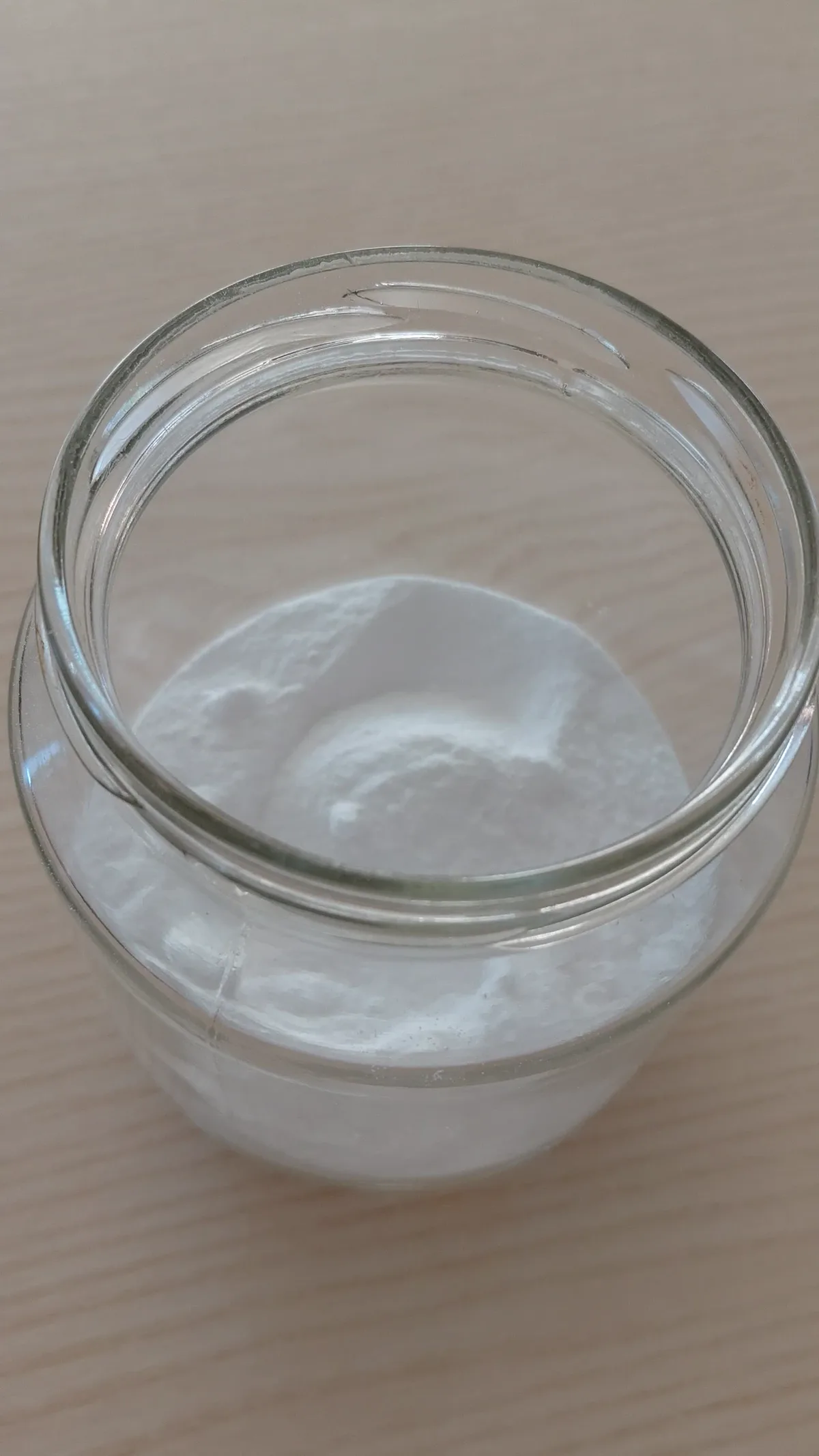
I also do not have original photos of the dirty dishes from those tests. So there are no dramatic before-and-after images here, and I have not recreated them for the story. The current photos show the real mixture and neutral dishwasher footage only.
That may be less visually exciting, but it is the honest version.
Why I stopped
The solution was creating more work
After four cycles, I was spending more attention on the experiment than I was saving through it. I was checking results, adjusting the approach, and still not getting the one outcome that mattered: reliably clean dishes.
This is not a scientific environmental comparison, and it is not a claim that every DIY dishwasher powder will fail. It is my practical conclusion from this specific experiment: a DIY option was not the sensible choice for us when it repeatedly did not work and created extra effort.
Sometimes a sustainable-ish decision is not about making everything yourself. Sometimes it is about noticing when an experiment has stopped helping.
What I’d do differently
Set the stop rule before the next experiment
I would decide in advance what “working” means, how many honest attempts I am willing to make, and which trade-offs would make the experiment no longer worthwhile. That keeps curiosity from quietly turning into an endless troubleshooting project.
I would also ask AI for help evaluating the result, not just creating the first solution. AI can help compare what I hoped to save with what the experiment is actually costing in time, effort, money, or waste. The final decision still belongs in real life.
Try it yourself
A three-question stop rule
Before you keep fixing a DIY solution, ask:
- Is it actually working?Judge the result you need, not just whether the idea sounds good.
- Is it still saving something that matters?Look honestly at time, money, effort, or waste in your real routine.
- Am I fixing the solution more than using it?If troubleshooting has become the main activity, it may be time to stop.
Take what helps. Leave what doesn’t.