Sustainable-ish Family Life
I Asked AI to Help Us Reduce Packaging Waste — Here’s What It Missed
I wanted one realistic idea.
Not a zero-waste makeover.
Not ten new habits.
Not another family project.
Just one small change that might help us reduce packaging waste without making everyday life more complicated.
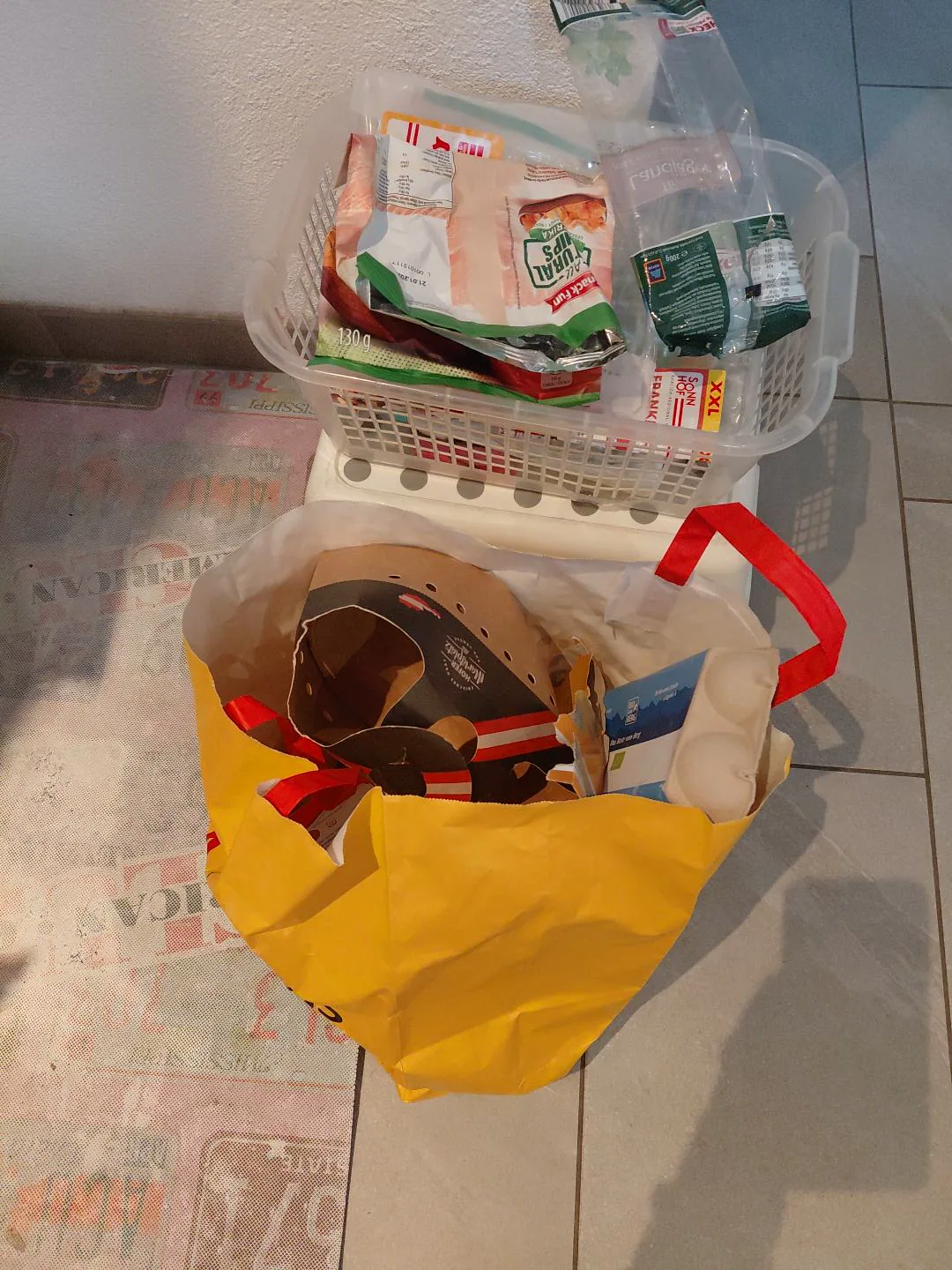
So I showed AI a photo of our recycling and asked for exactly that.
Its first suggestion sounded perfectly reasonable:
Buy the largest practical pack of something you already buy regularly.
And technically… sure.
Except we already do that where it actually makes sense.
That is where real life started getting in the way of the neat AI answer.
The problem with “just buy bigger packs”
A lot of the smaller packages in our kitchen contain foods that do not last forever.
Buying more does not make them stay fresh longer.
Sometimes it simply means we either:
- eat more just to finish the package, or
- throw more food away.
Neither feels like much of a sustainability win.
And this is where the first AI answer became interesting.
It was not necessarily wrong.
It was just missing information.
AI could see the packaging.
It could not automatically see how our family actually uses the food inside it.
AI needed the boring real-life details
This keeps coming up in my everyday AI experiments.
AI is very good at spotting patterns and suggesting a logical next step.
But family life has a ridiculous number of invisible constraints.
How quickly will this food spoil?
How much will we realistically use?
Would this idea require another shopping trip?
Would I need to buy a new container to make it work?
Would the “better” solution actually create more work?
Those details can completely change whether advice is useful.
So instead of accepting the first answer, I gave AI more context.
I explained that:
- we already buy larger packs when they are practical
- many of the smaller packs contain perishable food
- buying more could increase food waste
- I did not want an additional shopping trip
- I did not want to buy new reusable products
- the solution should not create extra work
Then I asked it to try again.
The same thing happened when I tried to simplify where all my tasks and reminders were living.
The second answer made much more sense
This time, the recommendation changed.
Instead of focusing on buying more, the idea became:
Look at the packaging format when you already need the same useful amount anyway.
That is a small distinction, but an important one.
The question was no longer:
Can I buy a bigger pack?
It became:
If I already need this amount, can I get it with fewer individual packages?
That felt much closer to something I could actually use.
No special shopping trip.
No extra product to buy.
No forcing ourselves to consume more food just because we bought it.
Just one small decision inside normal grocery shopping.
The real-life test: canned corn
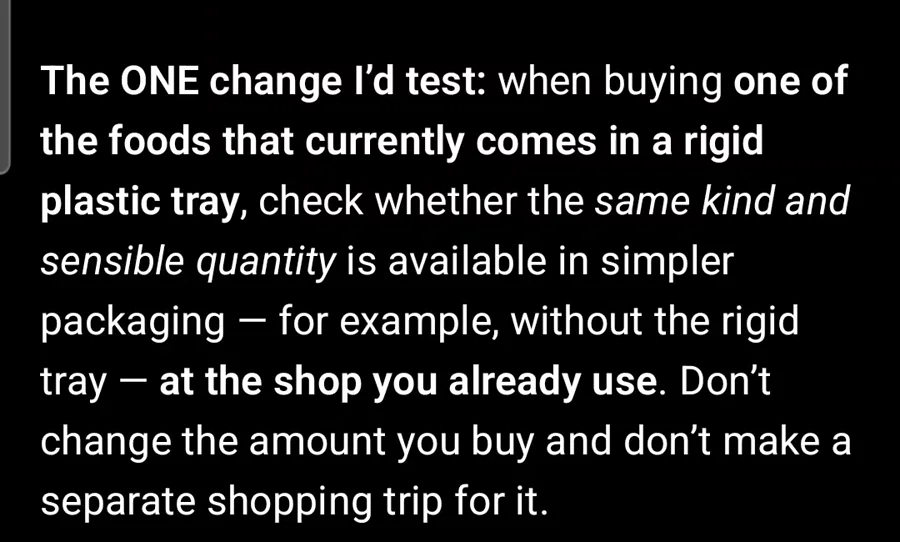
A few days later, I needed quite a lot of canned corn.
Normally, I might have bought several smaller cans.
This time, one larger can made sense for the amount we genuinely needed.
So that became my tiny real-life experiment.
And there is an important caveat here:
I am not claiming that one larger can is automatically better for the environment.
I did not calculate the full environmental footprint of the packaging, transport or production.
The useful observation was much narrower:
For this particular shop, one larger can gave us the amount we needed with fewer individual packages.
That is enough for this experiment.
No heroic zero-waste transformation required.
The useful part was not the corn
The corn was just the test.
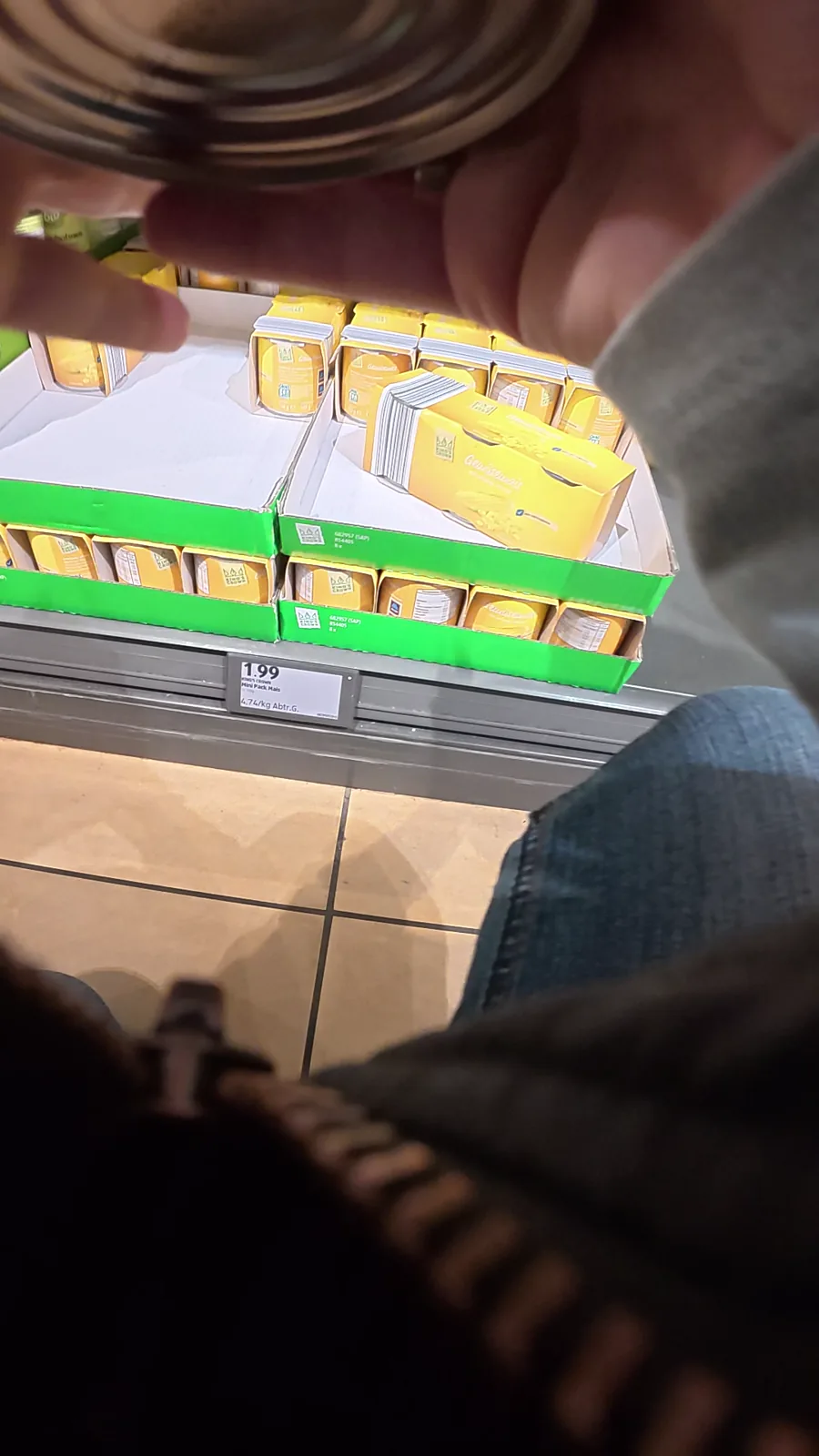
The more useful lesson was what happened to the AI advice after I added real-world constraints.
The first answer was generic.
The second had to account for:
- actual household demand
- food waste
- extra shopping
- unnecessary purchases
- extra effort
And suddenly the answer was much more usable.
That is a pattern I am seeing again and again:
Better AI advice often starts with better context — not a more complicated prompt.
The prompt I would use next time
If I were starting this experiment again, I would give AI the constraints immediately.
You could adapt this:
I want one realistic way to reduce packaging waste in our household.

Important context:
- we already buy larger packs where they make practical sense
- some foods spoil quickly, so buying more could increase food waste
- I do not want to make a separate shopping trip
- I do not want to buy new reusable containers or products
- the solution should not create extra work

Please suggest one small change I could test during my normal grocery shopping.
The important part is not the exact wording.
It is telling AI what a bad solution would look like in your real life.
A simple rule for more useful AI advice
Before asking AI to solve an everyday problem, try giving it three things:
1. What you already do
Otherwise it may recommend something you solved years ago.
2. What you do not want to increase
Food waste, spending, screen time, workload — whatever matters in that situation.
3. What would make the solution unrealistic
An extra shopping trip? Another app? Buying another organizer? More prep?
Those constraints often matter more than writing a clever prompt.
Because AI can spot the pattern.
Real life provides the context.
Mama Verdict
Try this with your own everyday problem
Next time an AI suggestion sounds good in theory but slightly ridiculous in real life, do not immediately throw the whole idea away.
Tell it what it missed.
Add your real constraints.
Then ask again.
That second answer may be much more useful than the first.
AI for real mom life — not perfect-life theory.