AI That Actually Helps
I Gave AI My Mom Brain — Here’s What Actually Helped
I gave AI a real, unfiltered mom brain dump to see whether it could actually reduce mental load. It helped me choose what mattered today — but “do later” turned out to be the interesting part.
There are days when the problem isn’t that I don’t know what needs doing.
The problem is that everything in my head feels equally active.
Buy this. Remember that. Do this soon. Don’t forget that thing next week. Something needs scheduling. Something else probably doesn’t need doing at all.
And somehow my brain treats all of it like:
IMPORTANT. PLEASE KEEP THINKING ABOUT THIS.
So I tried a very simple experiment.
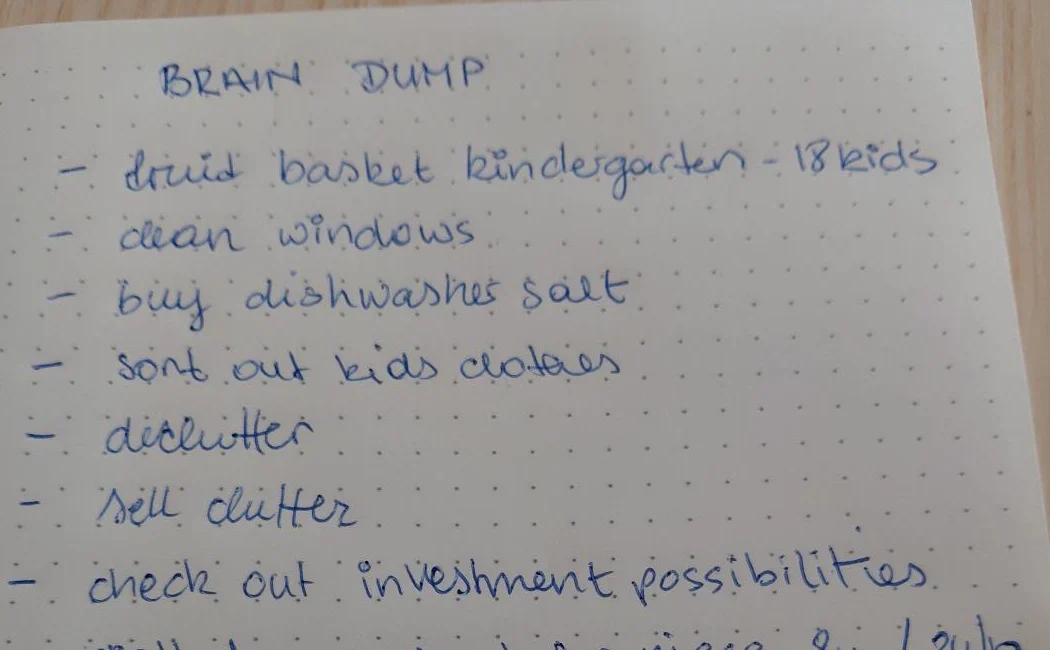
I wrote down everything that was currently taking up space in my head — on paper, without sorting it first — and gave the whole messy brain dump to AI.
My question was basically:
“What actually deserves my attention?”
I wasn’t looking for another beautiful to-do list.
I wanted to know whether AI could help me stop treating every thought like an equally urgent task.
The real-life problem
A brain dump can feel helpful at first because at least everything is finally out of your head.
But then you’re left with… a giant list.
And a giant list is still a giant list.
Some things need doing today. Some are for later. Some belong on a calendar. Some are things I need to buy. And some probably don’t deserve any more mental energy at all.
What I wanted to test was whether AI could help with that triage.
Not:
“Please organize my life perfectly.”
More like:
“Can you help me figure out what actually matters right now?”
What I asked AI
I took a photo of my handwritten brain dump and used this prompt:
“This is a real, unfiltered brain dump of everything currently taking up space in my head.

Please read the handwritten note in the photo and help me figure out what actually deserves my attention.

First, transcribe what you can clearly read. If anything is unclear, do not guess — mark it as unclear and ask me.

Then sort the items into only these five categories:

1. DO NOW — genuinely needs attention soon
2. DO LATER — needs doing, but not now
3. SCHEDULE — belongs at a specific time or date
4. BUY — something I actually need to get
5. LET GO — not really a task, unnecessary, duplicated, or something I can consciously stop carrying for now

Important:
- Do not turn everything into a task.
- Do not invent deadlines, priorities, or missing information.
- Do not add productivity advice or create a new system.
- Keep it practical and realistic for normal family life.
- If you are unsure where something belongs, say so instead of pretending to know.

At the end, tell me:

What are the 3 things that most deserve my attention right now — and why?”
That last part mattered more than I expected.
Because sorting a list is nice.
Knowing what to actually focus on today is useful.
What happened in real life
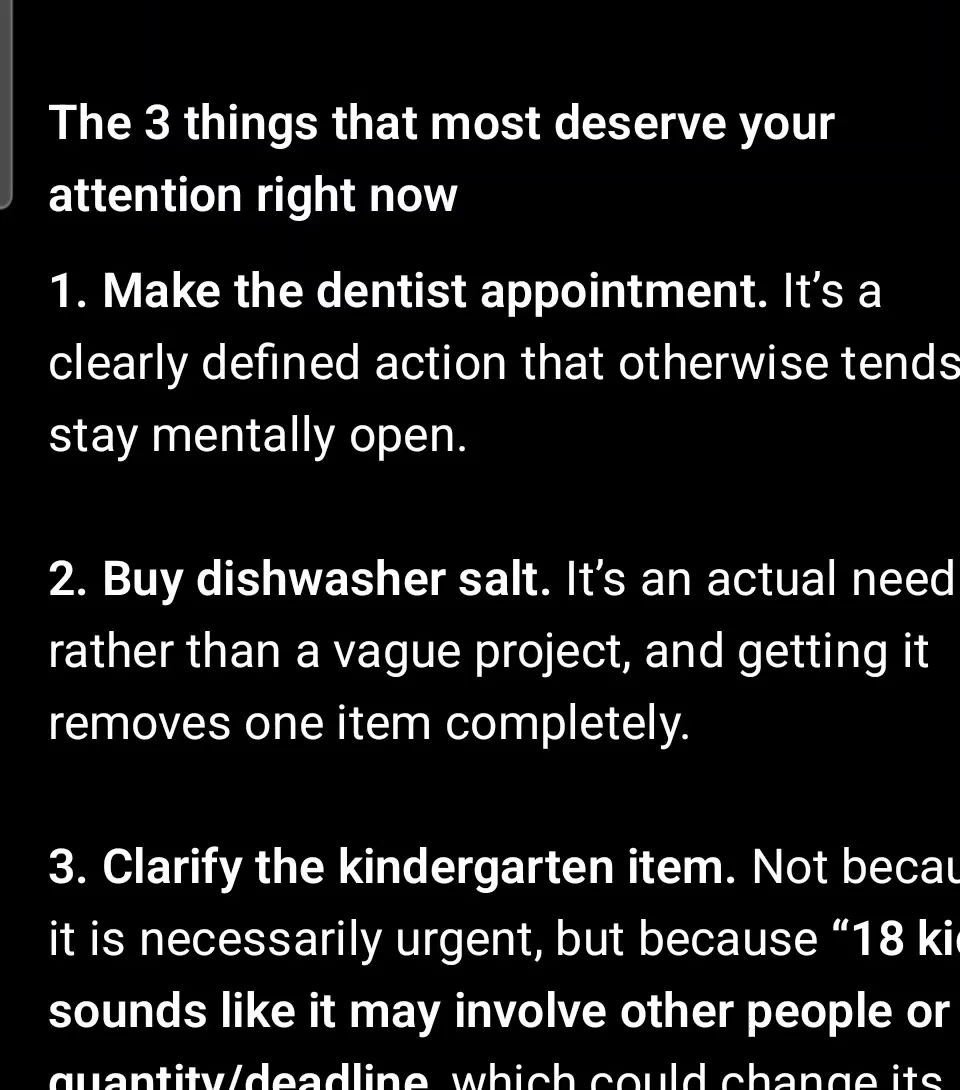
The AI sorted the brain dump into the five categories and picked a Top 3.
And honestly?
The Top 3 were good.
They made sense.
I looked at them and immediately knew what deserved my attention that day.
That part genuinely reduced some of the noise.
Instead of staring at one long page of unrelated things, I had three priorities.
That felt useful.
But then I noticed the flaw.
“Do later” is still… later
The items in Do later hadn’t actually disappeared.
They were just somewhere else on the list.
Which means I still needed a way to make sure I remembered them later.
And that matters, because this is exactly where a lot of mental load comes from.
It’s not only:
“What do I need to do?”
It’s also:
“How do I make sure I remember the thing that doesn’t matter today — but will matter eventually?”
So the AI had helped me clear today.
It hadn’t cleared my whole brain.
That distinction ended up being the most useful part of the experiment.
What I’d do differently
I wouldn’t ask AI to simply sort a brain dump and stop there.
The better question is:
“What happens to the open loops after today?”
If something belongs in “Do later,” I don’t want to keep mentally checking whether “later” has arrived yet.
So I changed the test.
I’m now experimenting with a version where AI also keeps track of those open loops and only brings them back when they actually matter.
The goal is not to create another giant productivity system.
Quite the opposite.
I want to see whether AI can help me carry less, not manage more.
And that part is still being tested.
Mama Verdict
Try it yourself
If your head feels full of unrelated little things, try this:
- Write everything down without organizing it.
- Give the list to AI.
- Ask it to separate now from later.
- Ask for only three priorities for today.
- Then check the “later” pile yourself.
The important question isn’t:
“Did AI make my list prettier?”
It’s:
“Do I know what deserves my attention now — and do I trust that the rest won’t get lost?”
That’s the part I’m testing next.
Would you want AI to remember the “later” stuff for you — and only bring it back when it actually matters?